How to Teach a Baby or Beginner Child to Draw
My niece ate the crayon. Purple. Non-toxic, fortunately. She was eighteen months, not really drawing—exploring texture, temperature, the resistance of paper versus the smoothness of the kitchen table. Her mother worried. I said: she’s learning what marks are. The eating was incidental.
Children don’t start with intention. They start with contact. The rest is patience.
What Actually Happens at the Beginning
Scribbling isn’t practice for later. It is the thing itself. The child discovers that hand movement creates visible consequence. Cause and effect, recorded. My nephew, same age, made horizontal lines exclusively for three months. We thought he was limited. Then he saw rain. Drew vertical lines for a week. He wasn’t limited; he was waiting for vertical to mean something.
Don’t correct. Don’t even praise too much. Praise creates performance, anxiety, the desire to repeat what worked. Let the marks be neutral, exploratory, owned.
Shapes: The Conversation
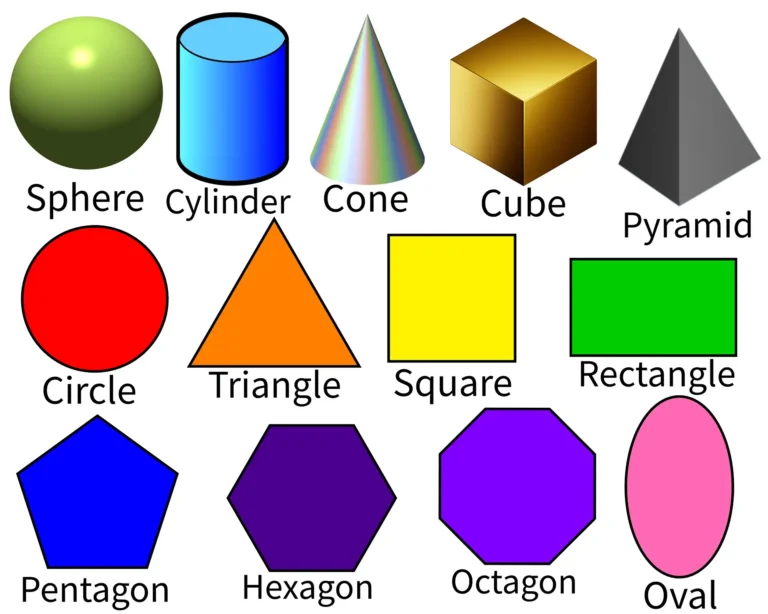
Not teaching. Talking. “That’s round like your plate.” “That line goes straight like the road.” The child hears, sometimes responds. My friend’s daughter heard “triangle” for months. Then one day pointed to a roof: “Same.” The connection was hers, not instructed.
Circles first, always. The arm moves naturally in rotation. Squares require corners, stopping, decision. Triangles are advanced—three separate movements, spatial memory. Expect circles for a long time. Celebrate them genuinely; they are difficult, the continuous curve.
The Step-by-Step Trap
Tutorials break drawing into manageable parts. They also break the wholeness, the reason for drawing. A child asked to draw “step one: circle, step two: ears” is following instructions, not seeing.
Better: draw together. Same subject, separate papers. You model looking, not result. “I see roundness here.” “This part goes up, then down.” The child draws what they noticed, not what you demonstrated. Different outcomes, same attention.
My nephew and I drew our hands. Mine was anatomically wrong, hurried. His had six fingers, all important. He counted them, satisfied. The counting was the point, not the hand.
Observation: The Real Curriculum
Not “look at this tree and draw it.” Too abstract. Specific: “Find the bumpiest thing in this room.” “Draw something that makes noise.” “Draw what you smell.” Absurd, yes. But children understand sensory instruction better than visual translation.
My niece, three, drew her grandmother’s lap. Not the person—the warmth, the softness, the being-held quality. Abstract lines, brown and pink. Her mother wept, understanding. The child didn’t know why. She just drew what she felt.
Lines: The Vocabulary
Straight, curved, zigzag, spiral. Not as exercise. As description. “Your hair goes like this”—spiral demonstration. “The dog’s back goes like this”—curve. The child absorbs that lines carry meaning, not just decoration.
Texture comes later, when the child has reason for it. Fur because they touched a dog. Grass because they fell in it. Otherwise, lines are arbitrary, forgotten.
Color: The Explosion
Not educational. Emotional. My nephew used only black for a month after his fish died. No one suggested this connection; he didn’t explain. Then green returned, gradually.
Crayons break. Pencils require pressure control. Markers bleed through paper to table. Each has consequence. I prefer broken crayons—less precious, more angles for grip variation, no perfection possible.
Don’t teach color theory. Let them discover that blue over yellow makes mystery, that red near green vibrates, that too many colors become brown. These lessons arrive through doing, not instruction.
The Perfection Problem
“Great job” is noise. “You used so much blue here” is attention. “This part looks fast, this part slow” is observation. The child learns that marks carry information, not just approval.
My friend’s daughter drew her family. Everyone had green faces. Her mother almost corrected: “People aren’t green.” Stopped. Asked instead: “What kind of day was this?” “Sick day. We all had fever.” The green was information, not error.
The Daily Question
Fifteen minutes is arbitrary. Some children draw for an hour, emptying themselves. Others make three marks and are complete. The routine matters more than duration. After breakfast, before sleep, whenever the hand wants to move.
A drawing corner sounds nice. Often becomes obligation, expectation, the “should” of creativity. Paper available, yes. Specific place, optional. The world is the place. Restaurant napkins, margins of unwanted mail, fog on bathroom mirrors.
What I Don’t Know
Professional training for young children is questionable. My nephew attended one class, age four. Came home with a “correct” sun, yellow circle, straight rays. Stopped drawing rain. Took six months to recover his vertical lines, his weather.
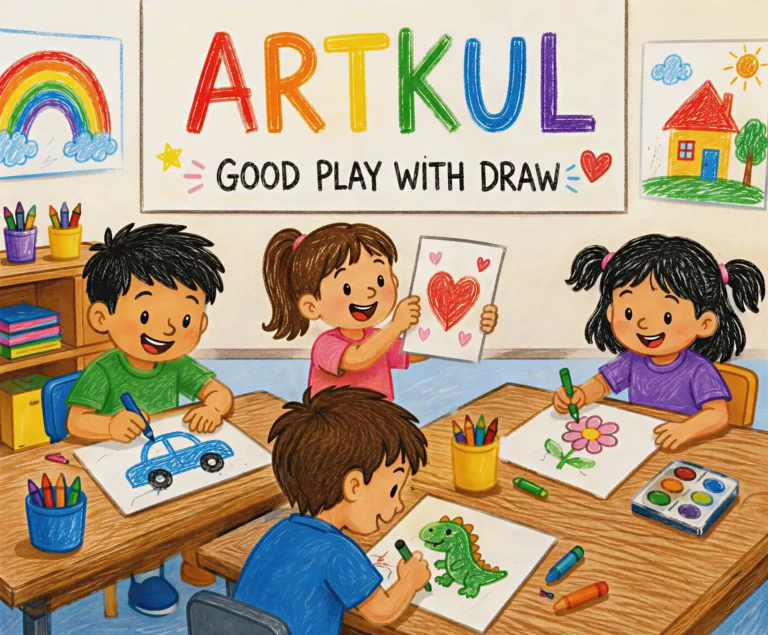
Ankita at Artkul works differently. I’ve watched her with young children. She draws alongside, doesn’t demonstrate. Asks questions, doesn’t instruct. The results are messy, individual, alive. But I don’t bring my own children there; I don’t have children. I observe, I report, I remain uncertain.
The Real Final Thought
Drawing is not preparation for anything. It is the thing itself: marks, attention, the translation of experience into visible form. The child who draws develops hand control, yes, observation, yes, confidence, sometimes. But these are side effects, not purposes.
The purpose is the mark. The moment of contact. The record that someone was here, saw this, felt enough to make it visible.
Let them eat the crayon. They won’t do it twice.
More Canvas & Insights