Learn Glass Painting in Madhyamgram
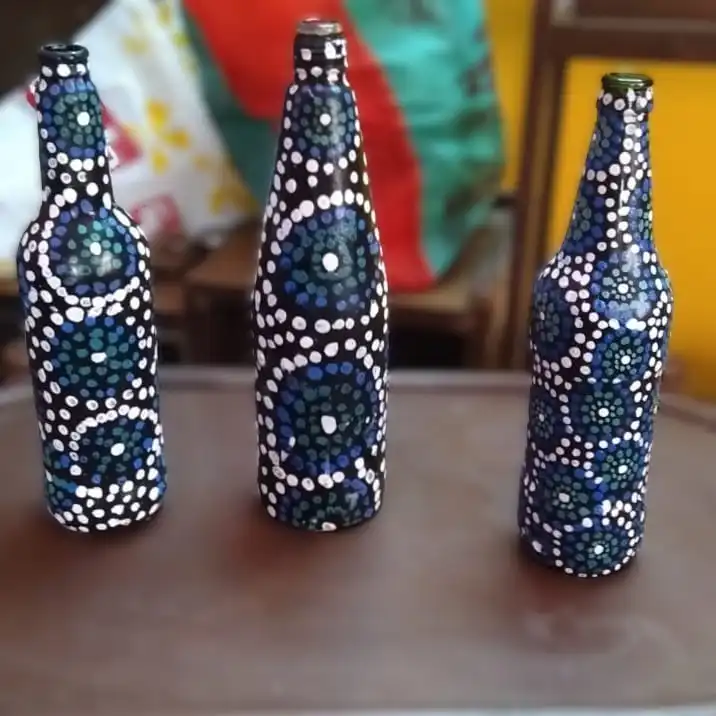
The first piece I made looked like a traffic accident. Colors bleeding through broken outlines, bubbles trapped under the surface, a sun that looked infected. I kept it. Still have it. The infection-sun reminds me that glass painting looks easy until you touch it.
What Glass Painting Actually Is
Not stained glass. That’s lead and heat and centuries of tradition. This is cold glass, tube outliners, transparent paint that behaves like liquid argument. It wants to spread, to mix, to find the path of least resistance. Your job is to build barriers, then negotiate with color.
The glow is real. Light through transparent pigment does something opaque paint cannot. But the technique is unforgiving. Mistakes don’t hide; they illuminate.
What I Learned the Hard Way
Cleaning: I skipped this once. Oils from my fingers created invisible barriers. The paint beaded, refused adhesion, pooled in ugly surprise. Now I clean with alcohol, then clean again, then avoid touching the surface with anything but tools. Paranoia is appropriate.
Outlining: The tube requires pressure memory. Too light, the line breaks. Too heavy, it piles, creates dams that trap color unevenly. I practiced on old window glass from a demolition site near Madhyamgram station. Fifty suns, all infected, before my hand understood the muscle memory.
Color: Transparent means every layer shows through. You cannot cover mistakes; you can only add complexity that distracts from them. I learned to work light to dark, to accept that the first wash will look anemic, to trust the accumulation.
Drying: Impatience destroys everything. I touched a piece at hour twenty, not twenty-four. Fingerprints in the finish. Had to scrape, restart, wait properly the second time. Glass painting teaches time as material.
Where I Learned
Not from videos. Videos hide the tactile reality—the exact viscosity of outliner, the sound of proper adhesion, the visual of paint at the correct flow rate.
At Artkul, Ankita demonstrated on actual glass, not camera-friendly demonstrations. Made mistakes deliberately, showed how to correct, when to abandon. Her own early pieces hang in the studio, slightly wrong, educational.
The class was small. Four students, one table, multiple failures happening simultaneously. We learned from each other’s errors. Riya from Barasat discovered that toothpicks remove bubbles; I was still blowing on the surface like a fool. Shared information, faster than individual struggle.
What We Actually Made
Not “projects.” Not finished decor for immediate display. Studies: color wheels on glass, gradient strips, failed outlines that became abstract compositions. The goal was understanding behavior, not producing portfolio pieces.
Eventually, a small panel. My own design, simplified drastically from ambition. Outlined over three sessions, colored over two, dried for a week. It hangs in my kitchen window. Morning light transforms it daily. Imperfect, alive, mine.
The Location
Madhymagram, technically. From New Barrackpore: auto through the bazar, past the railway crossing, stairs with chipped paint above a stationery shop. Not convenient. Worth the inconvenience.
From Barasat: closer, fifteen minutes. From Dum Dum: twenty. The travel is part of the commitment. Online options exist; I tried one first. Missed the immediacy, the correction that happens when a teacher physically adjusts your hand pressure.
What It Requires
Steady hands help, but aren’t mandatory. Patience is mandatory. The willingness to produce ugly work repeatedly, to understand that transparency reveals everything including your impatience.
Materials: glass paints, outliners, synthetic brushes, cleaning alcohol. Ankita provides initial supplies; students eventually develop preferences, buy specific brands. The investment is gradual, testable.
Who Should Try
Not everyone. The medium is slow, restrictive, occasionally frustrating. But if you want light as participant in your work, if you accept that control is negotiated rather than imposed, if you can tolerate visible process including error—then glass.
Contact
Artkul Madhymagram, North 24 Parganas +91 62910 04807
Ankita answers directly. Describe what you’ve tried, what failed, what you want light to do. She’ll know if this medium fits your temperament, or if you need something else first.
More Canvas & Insights