The Connection Between Drawing and Better Handwriting
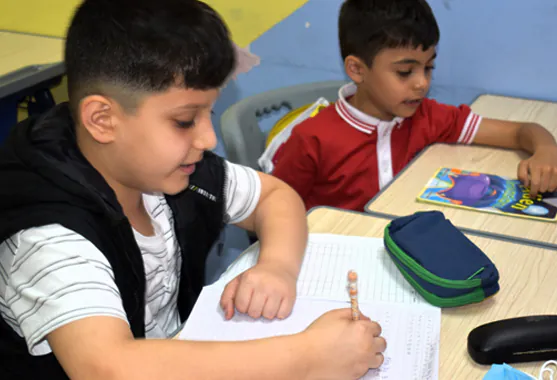
The boy’s ‘a’ kept floating. Not above the line, not below—just detached, drifting. His mother brought worksheets. Tracing pages. Special pencils with rubber grips. The ‘a’ floated higher.
At Artkul, we see this often. The problem isn’t the letter. It’s the hand controlling it.
What Actually Happens in a Hand

Writing is drawing with rules. Same muscles, same coordination, same need for pressure control and spatial judgment. But writing feels like failure—red marks, corrections, comparison. Drawing feels like experiment. The hand relaxes enough to learn.
I’ve watched children who cannot complete a handwriting line without exhaustion spend forty minutes on a charcoal still life. Same grip. Same fingers. Different relationship to error.
The Specific Case
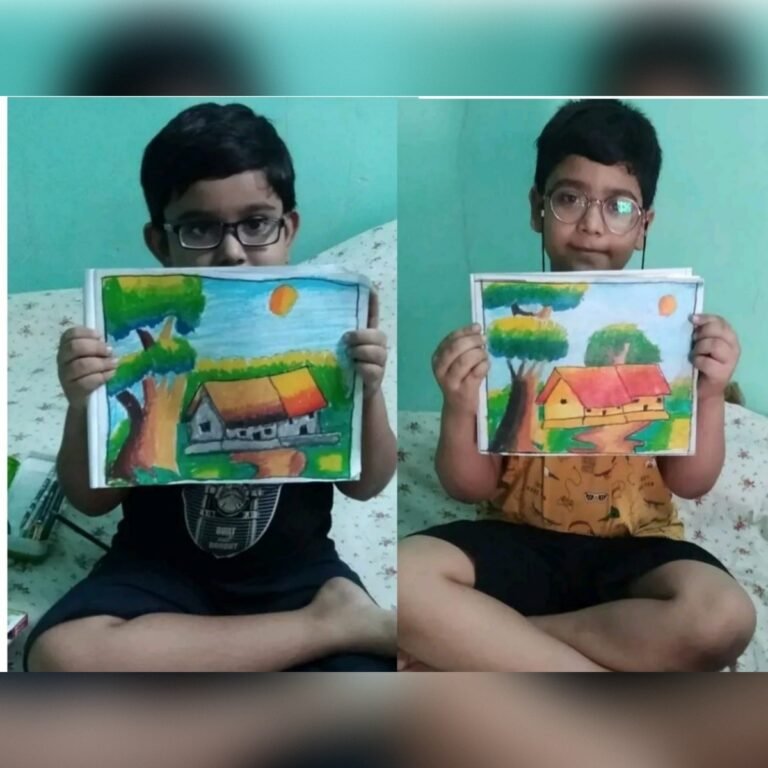
Arjun, eight, from New Barrackpore. His notebook was a battlefield—eraser holes, smudges, letters that started large and shrank to nothing as his hand tired. His mother described “handwriting practice” as daily crying.
She brought him to Artkul for “something creative.” Not therapy. Not remediation. Just drawing.
First sessions: he pressed too hard. Charcoal snapped. Paper tore. The marks were aggressive, dark, uncontrolled. Ankita didn’t correct the pressure. She redirected it—larger paper, arm movement, whole-body drawing. “The table holds your weight,” she told him. “Your hand only holds the stick.”
Week three: he noticed his own tension. Said so. “My shoulder hurts.” Awareness precedes change.
Week six: toned paper, white charcoal. He had to lift highlights, not just add dark. Subtraction. Control through restraint. His ‘a’s in school remained problematic. But his drawings began showing deliberate light touch in certain areas, heavy in others. Variable pressure—impossible in handwriting yet, but present in art.
Week ten: she gave him a small sketchbook. Pocket size. “Draw what you see waiting for the bus.” He drew his own hand holding the railing. The fingers were wrong—too long, strange joints—but the pressure was consistent. The lines confident.
His mother reported the floating ‘a’ had landed. Not perfect. But on the line, present, the same size as its neighbors. She didn’t know why. We didn’t claim credit. The hand had practiced enough variation to find middle.
Why Drawing Works When Writing Doesn’t
Writing demands correctness. Every error is visible, permanent, judged. Drawing—at least in our studio—demands only attention. The floating ‘a’ in a sketchbook is information about pressure. The floating ‘a’ on a worksheet is failure.
Children who fear their own marks cannot develop control. Control requires experimentation, and experimentation requires safety. Art class provides temporary safety. The skills transfer later, often without announcement.
What We Actually Do
Not “fine motor exercises” disguised as art. Real drawing, with consequences that happen to build relevant skills.
Contour drawing: looking at the subject, not the paper. Forces spatial memory, hand-eye coordination, trust in movement without constant visual checking. The same trust required for writing without looking at the hand.
Value studies: five tones from light to dark. Pressure regulation, deliberate and measured. The child who cannot modulate pencil pressure for handwriting learns it here for shadow.
Large format work: arm and shoulder engagement, not just fingers. Builds stamina, reduces the hand fatigue that collapses handwriting after three lines.
Small sketchbook work: scale translation, detail control, the precision of limited space. Like writing between lines, but chosen.
The Limitations
Drawing doesn’t fix everything. Arjun still writes slowly. Still prefers drawing. The transfer is partial, gradual, sometimes invisible for months.
Some children draw beautifully and write poorly. Different attention, different stakes. The connection isn’t guaranteed; it’s possible, a pathway among many.
And handwriting itself is changing. Digital tools, voice recognition, reduced curriculum emphasis. The skill matters less than it did. But the coordination, the patience, the hand’s relationship to intentional mark-making—those persist, useful beyond specific application.
What Parents Actually Notice

Not “better handwriting” immediately. Usually: “he holds the pencil differently,” “she doesn’t complain about art homework,” “he drew for an hour without stopping.”
The handwriting improvement arrives later, mentioned casually, almost surprised. “Oh, and his teacher said…” As if it were separate from the art, unrelated. We don’t argue the connection. It doesn’t require belief to function.
For Your Own Child
If the worksheets aren’t working, consider stopping them. Not forever. Temporarily. Replace with drawing—not “handwriting practice disguised as drawing,” but actual looking and marking, without correctness at stake.
The hand learns through variation. Thick and thin, dark and light, large and small, fast and slow. Writing offers none of this. Drawing offers all.
The floating letters may land. Or they may not. But the hand will become more capable, more aware, more its own. That capability persists, finds application, surprises everyone with where it appears.
Contact
Artkul Madhymagram, North 24 Parganas, West Bengal, India +91 62910 04807
We don’t promise better handwriting. We promise drawing, taught seriously, with attention to what hands need to develop.
More Canvas & Insights