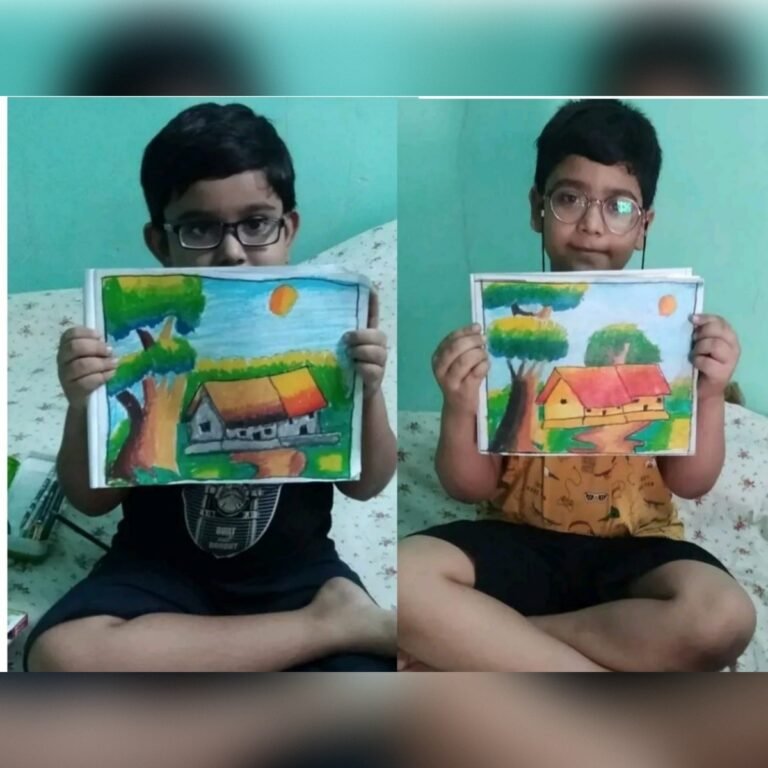
The Little Artist of New Barrackpore
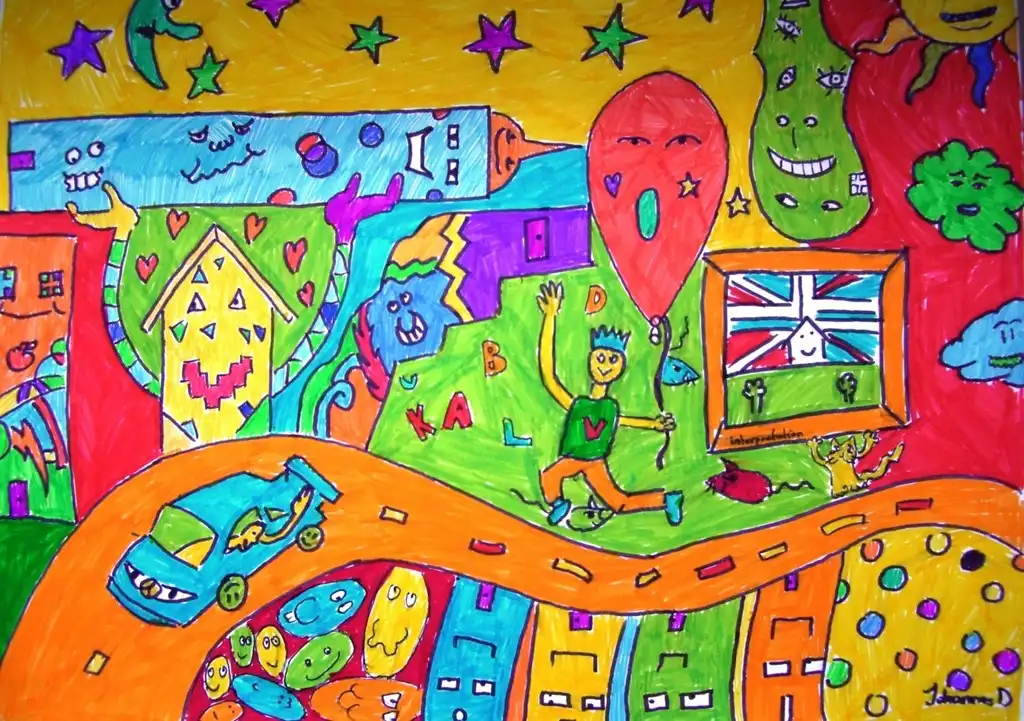
Smiriti drew on the backs of her father’s office papers. Bills, mostly, already paid, waiting to be filed or discarded. Her mother found them months later—trees growing from GST invoices, birds perched on “Amount Due” lines, a portrait of her grandmother on a telephone bill that somehow captured her permanent frown.
She was eight. She had never shown anyone.
What Silence Looks Like
Other children in the lane played cricket in the evenings. Smiriti watched from the window, sketchbook on her lap. Not exclusion, exactly. Different gravity. The other children shouted; she listened. Their noise entered her drawings as texture—crowded lines, overlapping shapes, the feeling of being near without being inside.
Her parents worried. Not about the drawing, but about the not-showing. “Is she happy?” her mother asked her father. “She’s quiet,” her father answered, which wasn’t an answer.
School teachers noticed. “Potential,” they wrote on report cards, a word that means nothing specific. Art class was forty minutes weekly, shared materials, instructions to “draw a scenery.” Smiriti’s scenery had shadows, unexpected angles, a dog that looked like it might move. The teacher circled it, wrote “Good,” moved on.
Finding the Class
Her mother heard about it from the vegetable vendor, who mentioned her niece went somewhere in Madhyamgram. “Not far,” she said, weighing bitter gourd. “Ankita. Teaches properly. Not just copying.”
The first visit: a room above a stationery shop, stairs with chipped paint, natural light from windows that didn’t quite close. Ankita opened the door with charcoal on her cheek, unaware. Smiriti’s mother thought: this is not a professional place. Smiriti thought: she has charcoal on her face.
What Actually Happened
No immediate transformation. The first three sessions, Smiriti drew what she always drew—trees, windows, the view from her own window transposed onto better paper. Ankita didn’t praise or correct. She asked: “What were you trying to see?” Smiriti didn’t answer. She wasn’t used to questions about seeing.
Week four: she gave her toned paper, gray, not white. “Your shadows are already dark,” she said. “Now find the light.” Smiriti didn’t understand. Drew anyway. The result was wrong, interesting, something she couldn’t have made alone.
Week eight: watercolor. She hated it. The control she had with pencil—precise, erasable—dissolved into accidents. Ankita made her continue. “The accident is information,” she said. “About water, about pigment, about your own impatience.” She painted over the same paper three times. It became mud. She made her keep it, label it: “Lesson in overworking.”
Week fifteen: she drew her own hand. Not from imagination, from looking. The thumb wrong, twice, three times. The fourth attempt: not perfect, but present. Her hand on paper, holding nothing, being held by her own attention.
The Competition
Her mother suggested it. Smiriti refused. Then agreed, refused again, finally submitted a drawing the night before deadline—her grandmother’s hands, knitting, the yarn tangled realistically. She didn’t expect to win anything. Expected to be seen, perhaps. The exposure itself felt like punishment and desire mixed.
Second prize. A certificate, a book on Indian artists, a photograph in local newspaper that her father still carries in his wallet. The important part: standing on stage, being visible, not dying from it. Smiriti later said the prize didn’t matter. The mattering was finishing the drawing, submitting it, surviving the visibility.
What Changed
Not everything. She still draws on bill backs when better paper runs out. Still watches cricket from windows. But now sometimes shows the drawings. Sometimes explains: “I was trying to capture how the light fell, not the tree itself.” The explanation is new. The seeing behind it is older, now named.
Her parents understand differently. “Potential” became specific: patience with repetition, tolerance for mistakes, the ability to be alone without being lonely. These are transferable. Her mathematics improved, though no one claims direct causation. Her teachers say she “participates more,” which means she answers when asked, not that she volunteers.
The Cost
Materials, yes. Paper, pigments, brushes that wear out. Time—travel to Madhyamgram, practice at home, the hours that might have been “productive” in other ways. The larger cost: learning that improvement is not linear. Weeks of apparent stagnation. Drawings that regress. The plateau that feels like failure but is preparation.
Smiriti’s mother nearly stopped the classes during one such plateau. “She’s not progressing,” she told Ankita. “She’s learning to see slower,” Ankita answered. “Which looks like stopping.” They continued.
What This Means
Not a success story. Success suggests conclusion. Smiriti is twelve now. She draws differently—more technically capable, less intuitively surprising. The trade-off is real. She knows more and risks less. Ankita pushes her toward discomfort, unfamiliar subjects, larger paper. She resists, complies, resists.
The question her parents asked—”Is she happy?”—remains unanswered. She is absorbed. She is occasionally frustrated. She is proud of specific drawings, disappointed by others. Whether this constitutes happiness, they no longer know how to measure.
For Other Parents
The vegetable vendor’s recommendation was accidental, unverified, potentially wrong. It happened to work. Other children in that same class have stopped attending, found different teachers, abandoned drawing entirely. There is no guaranteed path from silence to stage, from hidden to seen.
But the not-looking guarantees nothing. Smiriti’s grandmother, the one with the permanent frown, now sits for portraits willingly. “She sees me,” she says, not understanding how rare that is, how recently learned.
If your child draws on bill backs, on margins, on walls you haven’t yet discovered—this is not destiny. It is information. What you do with it, whether you find the chipped stairs and the charcoal-faced teacher, whether you can tolerate plateaus that look like stopping—this is the story that continues, unresolved, past any ending I can give it.
More Canvas & Insights