Why Drawing Is Good for 5 to 10 Year Old Children
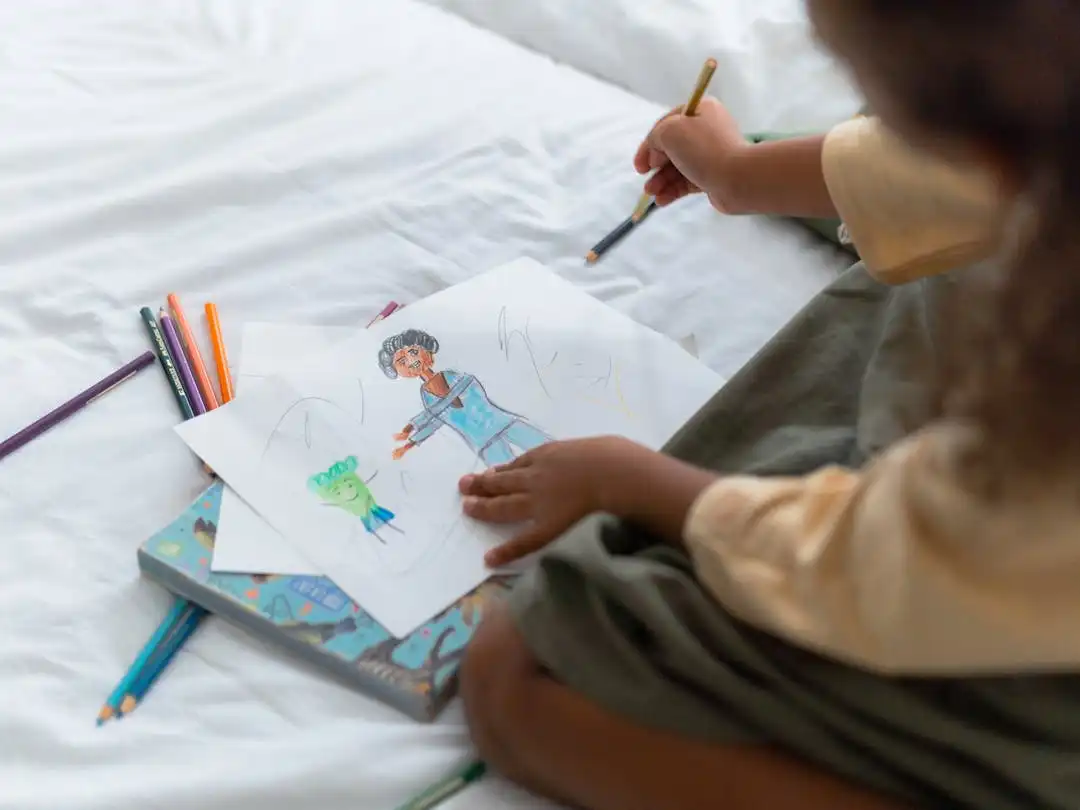
My niece drew her family last year. Everyone had normal heads except her mother, who had three. “That’s how many times Mummy checked her phone during dinner,” she explained. Her mother stopped bringing her phone to the table. The drawing did that. Not a conversation, not a punishment. A picture.
Children this age are documenting their world and their feelings about it simultaneously. They don’t separate observation from opinion yet. That’s what makes their drawings valuable—and sometimes uncomfortable.
What Actually Changes Between 5 and 10
At five, my nephew drew a “dog” that looked like a brown scribble with four sticks. He could explain every line: “This is his happy tail, this is where he keeps his dreams.” By ten, the same child draws dogs with proper proportions, fur direction, shadows. But ask him what the dog is thinking, and he shrugs. “It’s just a dog.”
The shift is real. Five-year-olds externalize inner life. Ten-year-olds learn external appearance. Both matter. Drawing tracks the transition.
What Parents Actually Notice
Not the “fine motor skills” improvement they read about in articles. Something more specific. The child who used to cry over a broken crayon now reaches for another color without drama. The one who crumpled “bad” drawings now keeps a “mistake” page in their sketchbook. These are temperament changes, not just hand control.
A father told me his seven-year-old started drawing comics about a superhero who forgets things. “Like me,” the father realized. “He’s processing my absent-mindedness without accusing me.” They started drawing together on Sundays. The father’s stick figures improved slightly. The connection improved significantly.
The Confidence Part
Not from praise. Children this age smell empty compliments. “Good job” makes them suspicious. What builds confidence is specificity. “I noticed you made the sky darker at the top” or “How did you decide where to put the dog’s eyes?” These observations tell children their choices matter, not just their outcomes.
My neighbor’s daughter, eight, stopped showing her drawings after a teacher marked them with grades. At home, without evaluation, she filled notebooks. Her mother hung them in the bathroom, the one room the child didn’t associate with “school.” The drawings returned to being hers again.
Emotional Expression: What It Actually Looks Like
Not therapeutic in the organized sense. More like overflow. A child draws a house with no doors. Another draws everyone smiling except one figure. A third uses only black for a week, then explodes into color.
Parents worry. Is this sadness? Anxiety? Sometimes. More often, it’s processing. The child with no doors was adjusting to a new school—feeling “no way back” to the old one. The black-only week followed a grandparent’s death. The drawings didn’t solve these situations. They held them, temporarily, in visible form.
Focus and Patience: The Reality
Not serene concentration. Fidgeting, changing positions, talking to themselves. A five-year-old might spend forty minutes on one drawing, but it’s not continuous attention. It’s bursts: intense mark-making, then staring at the paper, then sudden additional details.
Ten-year-olds approach differently. They plan. They erase. They get frustrated when reality doesn’t match intention. The patience required is different—enduring the gap between vision and execution. Some develop strategies: working in sections, accepting “good enough,” abandoning projects strategically.
Neither is better. Both are practice.
The Parent-Child Part
Drawing together fails when parents perform. The child knows. They see the careful house, the proportional tree, and they stop offering their own work for comparison.
What works: parallel drawing. Same subject, separate papers, no peeking. Then showing. The parent’s “I made the tree too big” validates the child’s own struggles. The child’s “I forgot feet” invites mutual problem-solving.
One mother draws her work stress—abstract shapes, heavy lines. Her six-year-old adds balloons. “To make it better,” she says. They don’t discuss this. The drawing does the talking.
Preparing for Future Skills
Perhaps. Some children continue. Others stop at twelve, thirteen, when social evaluation intensifies. The ones who continue often had early experiences of drawing as private pleasure, not performance.
But even the ones who stop carry something. The ability to visualize a plan before executing it. The comfort with trial and error. The knowledge that complex results come from simple marks accumulated.
An architect friend traces his spatial reasoning to childhood drawings of forts. A software engineer credits her debugging patience to hours of erasing and redrawing comic panels. Neither draws now. Both were changed by it.
What to Actually Do
Provide materials that don’t matter. Cheap paper. Crayons that break. Freedom to waste. Expensive supplies create pressure to “use them properly.” Children need permission to experiment badly.
Don’t ask “What is it?” Ask “Tell me about this.” The first demands categorization. The second invites story.
Keep some drawings. Not all. Let the child decide what matters enough to save. This teaches curation, personal judgment, the difference between making and keeping.
Display without hierarchy. The careful flower beside the chaotic battle scene. Both represent effort, attention, choice.
The Simple Truth
Drawing won’t make your child a genius. Won’t guarantee academic success or emotional stability. But it gives them a way to be alone with their mind that isn’t consumption—of screens, of others’ ideas, of packaged entertainment.
For fifteen minutes, they make something exist that didn’t before. At five, this feels like magic. At ten, it feels like competence. Both are true.
More Canvas & Insights