Creative School Project: Exploring Drawing for School Activities

Last month, I watched a fifth-grader cry over a school building. Not because she couldn’t draw it—because she’d drawn her old school. The one she’d left when her family moved. No one had asked for emotion. The assignment was “draw your school.” She gave them memory instead.
That’s what actually happens when you tell children to draw their environment. You get buildings, yes. But you also get what those buildings mean.
What the Project Actually Was
Not a competition. Not a “best drawing wins” situation. The teachers at this particular school—I’m not naming it because the specifics matter less than the approach—wanted students to really look at where they spend their days. The results were messy, uneven, and more honest than any curriculum-mandated art assignment I’ve seen.
What Students Actually Drew
A classroom from the back row perspective, showing only the backs of heads and the teacher’s hand holding chalk. The artist explained: “This is what I actually see.” No faces. No heroic teacher pose. Just the view from seat 14.
A playground drawn from above, as if the child were a bird. Swings in motion, captured with multiple overlapping positions. “I couldn’t decide which moment to show,” the artist said. So she showed all of them.
A library with one figure hidden behind a shelf, only feet visible. “That’s me,” the student admitted. “I go there when I don’t want to be found.”
The building itself—brick, windows, flagpole—appeared in many drawings. But usually as background. The foreground held what mattered: a specific staircase where someone fell, a water tap that actually works, the tree that drops flowers in March.
The “Easy” Part
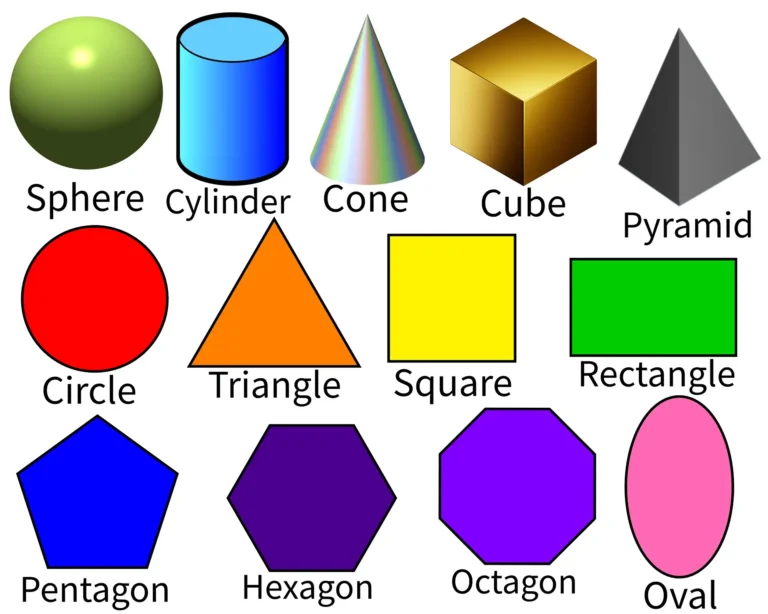
Teachers provided starting points, not rules. “Draw your classroom in three shapes maximum.” Some students used rectangles only. Others found triangles in the ceiling beams, circles in the clock. The limitation forced decisions. What matters enough to include?
For younger students, the prompt was simpler: “Draw what you hear during break time.” Visualizing sound—chatter, ball bounces, a teacher’s whistle—produced unexpected images. One child drew the whistle as a visible yellow line cutting through blue noise.
What Actually Happened
Not skill improvement, primarily. Though that occurred. More significantly: students noticed their environment differently afterward. One teacher reported a child pointing out that the classroom door had never been drawn from the inside, only the outside. “We always show welcome,” the student said. “Not what it feels like to be inside waiting.”
Another noticed that every school drawing in textbooks showed daytime, sunny. She drew evening, empty, lights on in only two windows. “Someone is working late,” she explained. “Probably preparing our tests.”
The Messy Reality
Some students refused. “I can’t draw.” The teachers didn’t push. Instead, they offered alternatives: collage of school photos, written description, map of the building from memory. Most returned to drawing eventually, on their own terms.
Materials were inconsistent. Some classes had proper paper and pencils. Others used notebook margins, ballpoint pens. The unevenness showed in the results. Also in the energy—students with good materials sometimes produced careful, dull work. Those with limited supplies often drew more freely, less fear of “wasting” good paper.
What Teachers Learned
The assignment revealed what students actually see versus what adults assume they see. A “simple” school drawing assignment became data about daily experience. Which spaces feel safe. Which feel monitored. Where students gather, where they hide.
One teacher noted that no one drew the principal’s office. Even though it was architecturally prominent. Even though it had a window facing the playground. “Interesting absence,” she wrote in her notes.
The Aftermath
Drawings went home. Some parents framed them. Others were lost immediately. A few students continued the project independently, drawing their schools from memory during vacation. “To remember it,” one explained. Even while still attending.
The exercise wasn’t repeated the following year. Different project, different focus. But some teachers kept the drawings, pulled them out months later when students seemed disconnected. “Remember when you saw this?” they’d ask. The reminder that observation was possible, that their perspective mattered.
Is This For Your School?
Don’t copy the assignment exactly. The specifics matter less than the intention: asking students to look, really look, at their daily environment. Then draw what they actually see, not what they think should be seen.
The results won’t all be display-worthy. Some will be confusing, private, technically weak. That’s the point. Drawing isn’t only about skill development. Sometimes it’s about noticing, remembering, or simply proving that you were present.
More Canvas & Insights