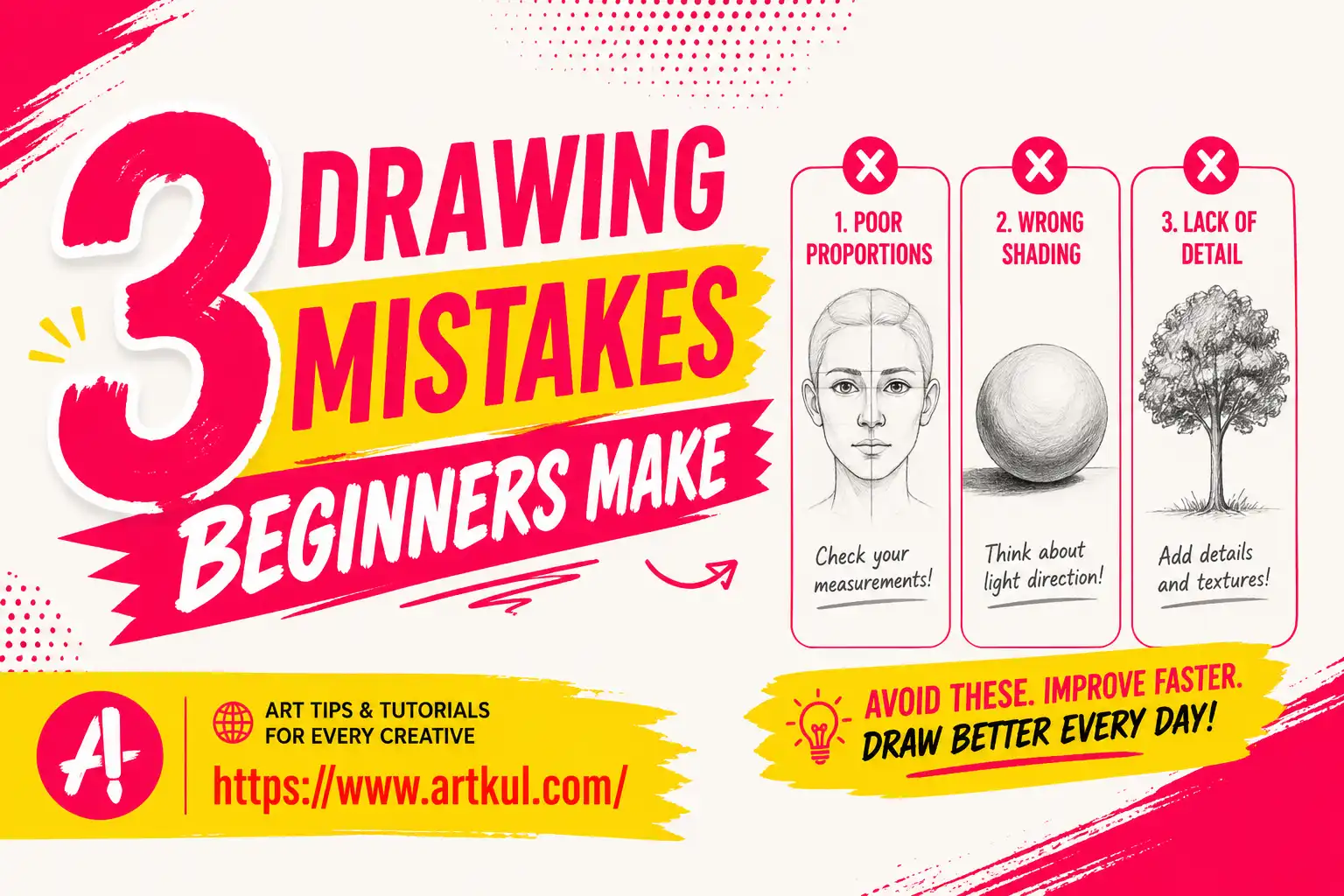
3 Drawing Mistakes Beginners Make (And How to Fix Them)
I made all three yesterday. Portrait of my neighbor’s dog. The eyes came out perfect—one eye, actually. The other floated too high, because I’d committed to the detail before checking placement. Spent an hour on fur texture. The dog looked like it was melting. Pressed so hard the paper grooved. Couldn’t erase, couldn’t adjust, couldn’t save it. Started over this morning. Same dog, worse light, better drawing.
That’s the thing about mistakes. You don’t fix them by reading. You fix them by making them again, slower, with awareness.
Mistake 1: Falling in Love with the Eye
The eye, the hand, the specific leaf that catches light—beginners gravitate to detail like moths. I still do. The eye is interesting. Proportion is boring. But the eye in wrong proportion is a horror.
What actually helps: I set a timer. Ten minutes, shapes only. No details allowed. If I catch myself sneaking an eyelash, I stop. The constraint is artificial, necessary. My hand wants to decorate; my eye needs to construct first. The battle continues.
Ankita at Artkul has a worse method. She makes students draw with their non-dominant hand for the first five minutes. The lines are terrible, uncontrolled, impossible to detail. Forces the big shapes. Cruel. Effective.
Mistake 2: Drawing What You Know, Not What You See
The brain is lazy. It stores symbols—eye = almond, nose = triangle, tree = lollipop. Drawing from symbol produces childish results because symbols are childish, acquired early, never updated.
I spent months drawing eyes that looked like my third-grade attempts. Same curve, same highlight dot, same wrongness. Then I forced myself to draw an eye upside down. Couldn’t access the symbol. Had to look at actual shapes, actual shadows, the specific way this person’s eyelid folded. The result was unfamiliar, alive, finally true.
The pencil-as-measuring-tool technique works, but feels ridiculous in public. I do it anyway. Hold arm straight, close one eye, mark the pencil with thumbnail. Compare. Repeat. People think I’m strange. My proportions improved.
Mistake 3: Committing Too Soon
Heavy pressure is fear. Fear of uncertainty, of the line being wrong, of the blank page winning. The heavy line pretends confidence. It is actually anxiety made visible.
I press hardest when I’m tired, when the drawing matters, when someone might see it. The solution isn’t lighter pressure—it’s more pages. Draw on newsprint, cheap, discardable. Draw the same thing five times, badly, without consequence. The fifth attempt, the pressure relaxes. Not because I learned control. Because I stopped caring about the outcome.
My sketchbook has a “destruction” section. Pages meant to be ruined. I draw hard there, deliberately, until the paper tears. The contrast teaches me what pressure actually does. The other sections benefit.
What Actually Improves
Not avoiding mistakes. Making them faster, recognizing them sooner, correcting before attachment sets in. The eye I spent an hour on—yesterday’s disaster—took ten minutes today. Because I checked placement first. Because I was willing to redraw it three times before committing.
Progress is not linear. Last month’s drawings were better than this week’s. Stress, sleep, distraction—all affect the hand. I don’t trust “improvement” as a steady graph. I trust specific moments when something clicked, when the line felt true, when I surprised myself.
The Real Fix
Draw more. Draw badly. Draw the same thing until you’re bored, then draw it once more. The mistakes repeat, but your relationship to them changes. They become familiar, almost friendly. “Ah, you again,” instead of “Not again.”
Ankita says beginners quit because they think good drawing feels good. It doesn’t. It feels uncertain, tentative, occasionally wrong even when correct. The confidence comes later, retrospectively, when you look back and see what you made.
I’m not there yet. Yesterday’s dog still bothers me. Today’s is better. Tomorrow’s might be worse. The drawing continues regardless.
More Canvas & Insights